
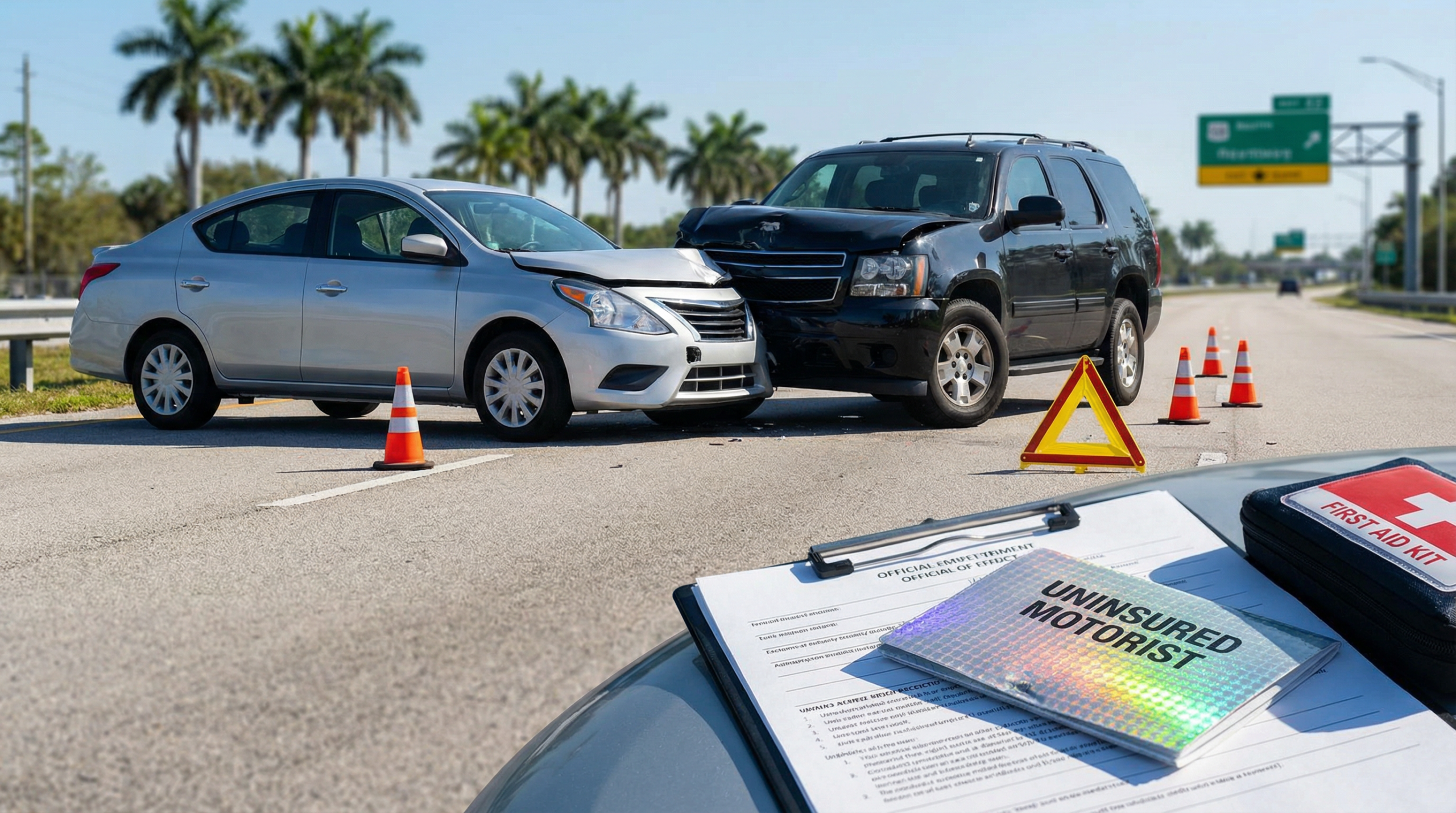
If an at-fault driver is uninsured in Florida, recovering compensation for your damages can be complex. Florida law requires drivers to carry Personal Injury Protection (PIP) and property damage liability (PDL), but many drivers do not comply. Your ability to recover damages often depends on your own Uninsured Motorist (UM) coverage or pursuing legal action directly against the uninsured driver.
What is Uninsured Motorist (UM) Coverage in Florida?
Uninsured Motorist (UM) coverage in Florida is an optional addition to your auto insurance policy. It protects you if you are injured by a driver with no or insufficient bodily injury liability insurance. This coverage pays for medical expenses, lost wages, and pain and suffering that the at-fault uninsured driver would typically be responsible for [1].
Supporting Explanation: While Florida is a no-fault state for initial medical expenses through PIP, serious injuries often exceed PIP limits. Without UM coverage, you might face substantial out-ofpocket costs if the at-fault driver is uninsured. UM coverage acts as a safeguard, providing a crucial financial safety net for you and your passengers in such unfortunate circumstances. It can cover both bodily injury and, in some cases, property damage, depending on your specific policy terms.
Can You Sue an Uninsured At-Fault Driver in Florida?
Yes, you can sue an uninsured at-fault driver in Florida for damages. They remain personally liable for harm caused, even without insurance. However, obtaining a court judgment does not guarantee payment, as many uninsured drivers lack sufficient assets or income to satisfy such a judgment [2].
Supporting Explanation: Pursuing a lawsuit against an uninsured driver can be a lengthy and expensive process. Even if a court orders the at-fault driver to pay, enforcing that judgment can be challenging. This is why having your own Uninsured Motorist (UM) coverage is often the most practical way to ensure you receive compensation. An experienced personal injury attorney can assess the uninsured driver’s assets and advise on the feasibility of pursuing a lawsuit.
How Does Your Own Insurance Protect You from an Uninsured Driver in Florida?
Your own insurance offers protection when an uninsured driver is at fault in Florida. Mandatory Personal Injury Protection (PIP) covers 80% of medical bills and 60% of lost wages up to $10,000, regardless of fault [3]. Uninsured Motorist (UM) coverage then covers damages beyond PIP limits, including additional medical expenses, lost wages, and pain and suffering.
Supporting Explanation: Collision coverage on your policy can pay for repairs to your vehicle, regardless of who was at fault. However, you would typically pay your deductible, and your insurer would then attempt to recover these costs from the at-fault driver (a process called subrogation). If the at-fault driver is uninsured, your UM property damage coverage (if you have it) or collision coverage becomes vital for vehicle repairs. Understanding your policy’s specifics is key to navigating these situations effectively.
What Steps Should You Take After an Accident with an Uninsured Driver?
After an accident with an uninsured driver in Florida, take specific steps to protect your rights. Ensure safety and call 911 to report the incident, obtaining a police report. Exchange information with the other driver, even if they claim to be uninsured, noting their name, contact details, and vehicle information.
Supporting Explanation: Seek immediate medical attention for any injuries, as delays can complicate your claim. Document everything at the scene with photos and videos, capturing vehicle damage, road conditions, and any visible injuries. Notify your insurance company promptly about the accident, informing them that the other driver was uninsured. It is also highly advisable to consult with a personal injury attorney to understand your legal options and navigate the complexities of dealing with an uninsured at-fault driver.
Key Takeaways
- Uninsured Motorist (UM) Coverage is Crucial: This optional coverage is often your best protection against uninsured at-fault drivers in Florida.
- PIP Coverage is Primary: Your mandatory Personal Injury Protection (PIP) covers initial medical expenses and lost wages up to $10,000, regardless of fault.
- Personal Liability Remains: Uninsured at-fault drivers are still personally liable, but collecting damages from them can be challenging.
- Document Everything: Thorough documentation, including a police report and medical records, is essential for any claim.
- Seek Legal Counsel: An attorney can help you understand your rights and options when dealing with an uninsured driver.
Frequently Asked Questions About Uninsured Drivers in Florida
What if I don’t have Uninsured Motorist (UM) coverage?
Without Uninsured Motorist (UM) coverage, your options for recovering damages from an uninsured at-fault driver in Florida are limited. You would primarily use your Personal Injury Protection (PIP) for initial medical expenses and potentially your health insurance. For additional damages like pain and suffering, a personal injury lawsuit against the at-fault driver is typically required.
Will my insurance rates go up if an uninsured driver hits me?
Your insurance rates may or may not increase if an uninsured driver hits you; it depends on your policy and specific factors. In Florida, if you are not at fault, rates typically should not rise solely due to another driver’s negligence. However, filing a claim under your UM or collision coverage might sometimes affect future premiums, based on your insurer’s policies and claims history.
Is Uninsured Motorist (UM) coverage mandatory in Florida?
Uninsured Motorist (UM) coverage is not mandatory in Florida, though highly recommended. Florida law requires Personal Injury Protection (PIP) and Property Damage Liability (PDL) insurance. UM coverage, while optional, offers crucial protection against financial burdens when an at-fault driver lacks sufficient insurance to cover your injuries and losses.
How long do I have to file a lawsuit after an accident in Florida?
In Florida, the statute of limitations for filing a personal injury lawsuit after a car accident is generally two years from the accident date. This means you typically have two years to initiate legal action against the at-fault driver or their insurance company. Missing this deadline can result in losing your right to pursue compensation.
What is the minimum insurance required in Florida?
Florida requires vehicle owners to carry minimum insurance: $10,000 Personal Injury Protection (PIP) and $10,000 Property Damage Liability (PDL). PIP covers 80% of medical expenses and 60% of lost wages up to its limit, regardless of fault. PDL covers damage you cause to others’ property. Bodily injury liability (BIL) coverage, which pays for injuries you cause, is not mandated.
Navigating the aftermath of an accident with an uninsured driver can be overwhelming. If you or a loved one has been injured in a car accident by an uninsured driver in Florida, it is important to understand your rights and options. The team at Gagliano Law, PLLC is dedicated to helping accident victims seek the compensation they deserve. Contact us today for a consultation to discuss your specific situation and learn how we can assist you.
For personalized legal guidance regarding your personal injury claim, reach out to Gagliano Law, PLLC at 813-444-9724 or visit our contact page at https://lawgagliano.com/contact/.
Disclaimer: This article is intended for informational purposes only and does not constitute legal advice. The information provided should not be used as a substitute for professional legal counsel. Always consult with a qualified attorney for advice tailored to your specific situation.
References
[1] Florida Statute 627.727 – Uninsured motorist coverage. (n.d.). Retrieved from https://www.leg.state.fl.us/STATUTES/index.cfm?App_mode=Display_Statute&URL=0600-0699/0627/Sections/0627.727.html [2] What Happens if the At-Fault Driver Was Uninsured in Florida? (2025, December 12). Hale Law. Retrieved from https://halelaw.com/what-happens-if-the-at-fault-driver-was-uninsured-in-florida/ [3] Florida Statutes 627.736 – Required personal injury protection benefits; exclusions; primary coverage. (n.d.). Retrieved from https://www.leg.state.fl.us/STATUTES/index.cfm?App_mode=Display_Statute&URL=0600-0699/0627/Sections/0627.736.html
Related Posts