
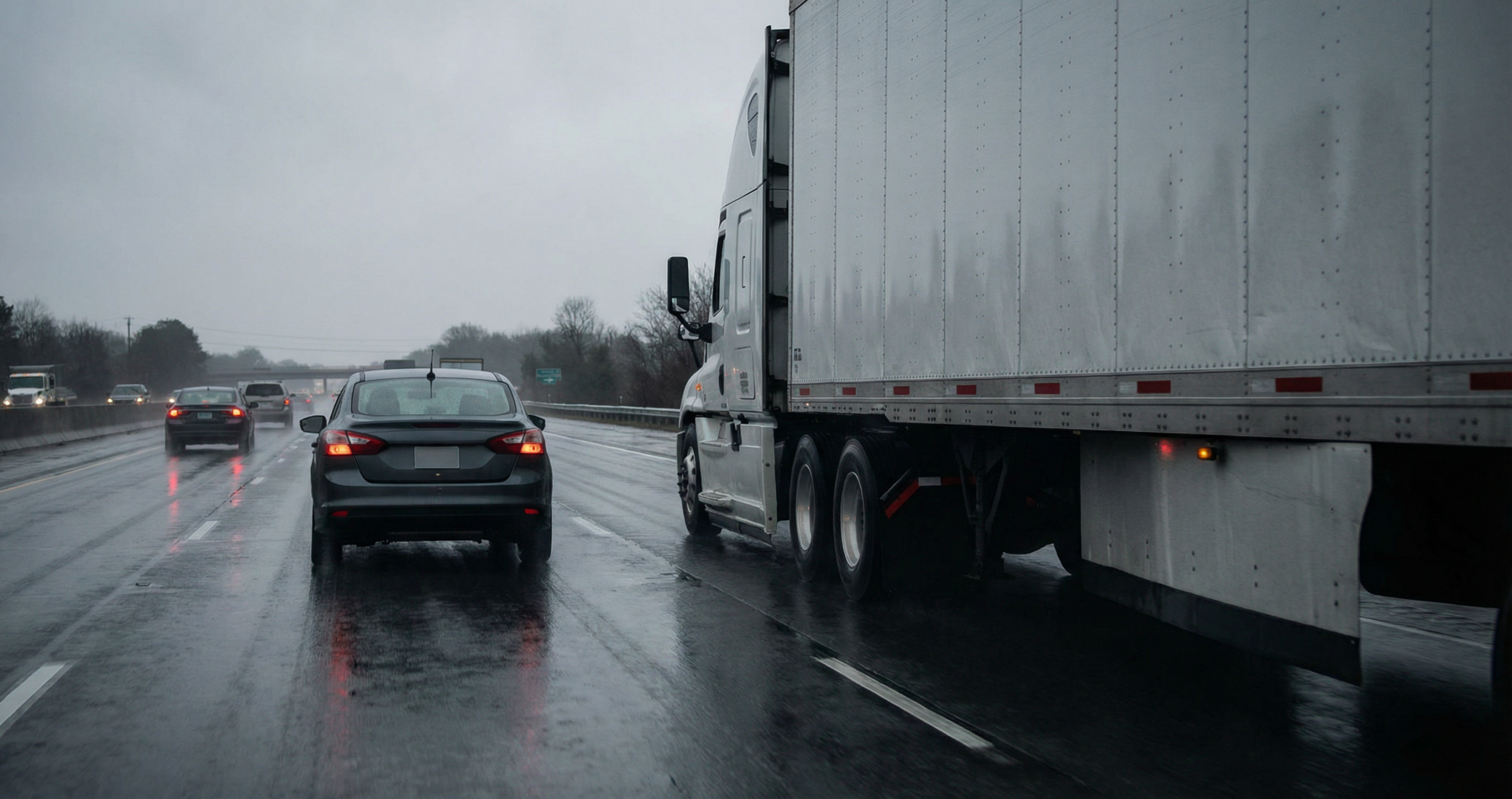
Truck accident claims are typically more complex than standard car accident claims due to several factors. These include the severe nature of injuries, the involvement of multiple potentially liable parties, stringent federal and state regulations governing commercial vehicles, and the unique types of evidence required. These elements combine to create a significantly more intricate legal process.
What Makes Truck Accident Claims More Complicated Legally?
Legally, truck accident claims are more complicated because they involve a broader scope of laws and potential defendants. Unlike car accidents, which often focus on one or two drivers, truck accidents bring in federal regulations, corporate liability, and a wider array of evidence, making the legal strategy more intricate. This expanded legal landscape requires specialized knowledge to navigate effectively.
Commercial truck accidents are governed by both state laws and federal regulations, primarily enforced by the Federal Motor Carrier Safety Administration (FMCSA). These regulations cover aspects such as driver hours-of-service, vehicle maintenance, and driver qualifications. Violations of these rules can establish negligence. Furthermore, multiple parties beyond the truck driver, such as the trucking company, cargo loaders, or even parts manufacturers, may share liability, necessitating a thorough investigation to identify all responsible entities. The higher insurance policy limits for commercial vehicles also mean that insurance companies often mount a more aggressive defense. FMCSA requires minimum liability coverage of $750,000 for general freight carriers and up to $5,000,000 for carriers of hazardous materials under 49 CFR Part 387 [5]. Under Florida Statute § 768.81(6) [6], if the injured person is found more than 50% at fault, they recover nothing. If you were driving a passenger vehicle, your PIP coverage under Florida Statute § 627.736 [7] provides the initial $10,000 in medical benefits regardless of fault. The statute of limitations for truck accident claims is two years from the date of the accident under Florida Statute § 95.11 [8].
How Do Federal Regulations Impact Truck Accident Cases?
Federal regulations significantly impact truck accident cases by introducing specific standards that can determine liability. The FMCSA sets detailed rules for commercial truck operations, and any breach of these rules can serve as powerful evidence of negligence in a claim. These regulations add layers of legal scrutiny not present in typical car accidents.
Key FMCSA regulations include rules on Hours of Service (HOS) (49 CFR Part 395) [1], which limit driving time to prevent fatigue. Drug and alcohol testing requirements (49 CFR Part 382) [2] mandate testing for commercial drivers, with positive results leading to disqualification. Vehicle maintenance standards (49 CFR Part 396) [3] require regular inspections and repairs, while driver qualification rules (49 CFR Part 391) [4] ensure drivers hold valid Commercial Driver’s Licenses (CDLs) and meet physical standards. A violation of any of these regulations can directly contribute to an accident and provide crucial evidence for a personal injury claim.
Who Can Be Held Liable in a Commercial Truck Accident?
In a commercial truck accident, liability can extend beyond just the truck driver to several other parties. This expanded pool of potential defendants makes truck accident claims more complex than car accidents, where liability is typically limited to the involved drivers. Identifying all liable parties is crucial for pursuing full compensation.
Potential liable parties often include the truck driver for negligent operation, the trucking company for issues like negligent hiring, inadequate training, or pressuring drivers to violate safety rules. The cargo loading company may be liable if improper loading caused the accident. Vehicle or parts manufacturers could be responsible for defective components. Additionally, third-party maintenance contractors might be held accountable for negligent repairs. The involvement of multiple parties, each with their own insurance and legal teams, complicates the investigation and negotiation process significantly.
What Unique Evidence Is Crucial in Truck Accident Claims?
Unique evidence is crucial in truck accident claims because it provides specific insights into commercial vehicle operations not found in car accidents. This specialized evidence, such as electronic logs and black box data, is vital for establishing fault and proving negligence. Its collection and analysis require specific expertise.
Unlike car accidents, truck accident investigations often involve Electronic Logging Device (ELD) data, which records driver hours and can reveal Hours of Service violations. Event Data Recorders (EDRs), or “black boxes,” capture critical pre-impact data like speed and braking. Driver qualification files, maintenance records, and cargo loading manifests also provide essential information. These documents and data sources are often subject to federal retention requirements, but prompt legal action is necessary to ensure their preservation, as they can be overwritten or destroyed if not secured quickly through a spoliation letter.
How Do Injuries and Damages Differ in Truck Accidents?
Injuries and damages in truck accidents typically differ significantly from car accidents due to the sheer size and weight disparity of the vehicles involved. Collisions with large commercial trucks often result in more severe, life-altering injuries and extensive property damage. This severity leads to higher medical costs, longer recovery times, and greater financial burdens for victims.
Victims of truck accidents frequently sustain catastrophic injuries, including traumatic brain injuries, spinal cord injuries, multiple fractures, and internal organ damage. These injuries often require prolonged medical treatment, rehabilitation, and may result in permanent disability or wrongful death. The economic and non-economic damages sought in these cases are consequently much higher, involving complex calculations for future medical care, lost earning capacity, pain and suffering, and emotional distress. The increased stakes mean that insurance companies and trucking corporations will typically invest heavily in defending against such claims.
For comprehensive legal guidance on personal injury matters, including truck accidents, consider reaching out to Gagliano Law, PLLC. Our experienced team understands the complexities involved and is dedicated to protecting your rights. Visit our Personal Injury page for more information.
Key Takeaways
- Truck accident claims involve more complex legal frameworks due to federal and state regulations.
- Multiple parties, including trucking companies and cargo loaders, can be held liable.
- Unique evidence like ELD data and black box recordings are critical for these cases.
- Injuries and damages are typically more severe, leading to higher compensation claims.
- Prompt legal action is essential to preserve evidence and navigate complex regulations.
Frequently Asked Questions
Why are there more liable parties in a truck accident than a car accident?
There are typically more liable parties in a truck accident than a car accident because the commercial trucking industry involves a chain of responsibility. Beyond the driver, the trucking company, cargo loader, vehicle manufacturer, and maintenance providers all have roles and duties that, if neglected, can contribute to an accident. This contrasts with car accidents, where liability usually rests with the individual drivers involved. Each party
in the commercial trucking ecosystem has specific legal obligations, and a failure to meet them can result in shared liability.
What is the role of the FMCSA in truck accident claims?
The Federal Motor Carrier Safety Administration (FMCSA) plays a crucial role in truck accident claims by setting the safety standards for the entire trucking industry. These federal regulations govern everything from how long a driver can be on the road to how a truck must be maintained. When a truck driver or trucking company violates these regulations, it can be used as direct evidence of negligence, which is a key element in a personal injury claim.
How does the evidence in a truck accident case differ from a car accident?
The evidence in a truck accident case differs from a car accident because of the technology and documentation required for commercial vehicles. Trucks are often equipped with Electronic Logging Devices (ELDs) and Event Data Recorders (EDRs), which provide detailed data on the truck’s operation. Additionally, there are extensive records related to driver qualification, vehicle maintenance, and cargo loading. This type of evidence is not typically available in a standard car accident case and is vital for proving liability.
Why is it important to act quickly after a truck accident?
It is important to act quickly after a truck accident because critical evidence can be lost or destroyed. Federal regulations require trucking companies to maintain certain records, but not indefinitely. For example, data from an EDR can be overwritten in a short period. By taking swift action, an attorney can send a preservation letter to ensure that all relevant evidence is saved, which is essential for building a strong case.
If you or a loved one has been involved in a truck accident, the complexities of the legal process can be overwhelming. At Gagliano Law, PLLC, we have the experience and resources to handle these challenging cases. We are committed to helping our clients navigate the legal system and fight for the compensation they deserve. For a free consultation, please call us at 813-444-9724 or visit our contact page at https://lawgagliano.com/contact/.
This article is for informational purposes only and does not constitute legal advice. The information contained herein is not intended to create, and receipt of it does not constitute, an attorney-client relationship. You should not act or refrain from acting based on this information without seeking professional legal counsel. Past results do not guarantee a similar outcome.
References
[1] 49 CFR Part 395 – Hours of Service of Drivers [2] 49 CFR Part 382 – Controlled Substances and Alcohol Use and Testing [3] 49 CFR Part 396 – Inspection, Repair, and Maintenance [4] 49 CFR Part 391 – Qualifications of Drivers and Longer Combination Vehicle (LCV) Driver Instructors [5] 49 CFR Part 387 – Minimum Levels of Financial Responsibility for Motor Carriers [6] Florida Statute § 768.81(6) – Comparative Fault [7] Florida Statute § 627.736 – Required personal injury protection benefits; exclusions; priority [8] Florida Statute § 95.11 – Limitations other than for the recovery of real property
Related Posts